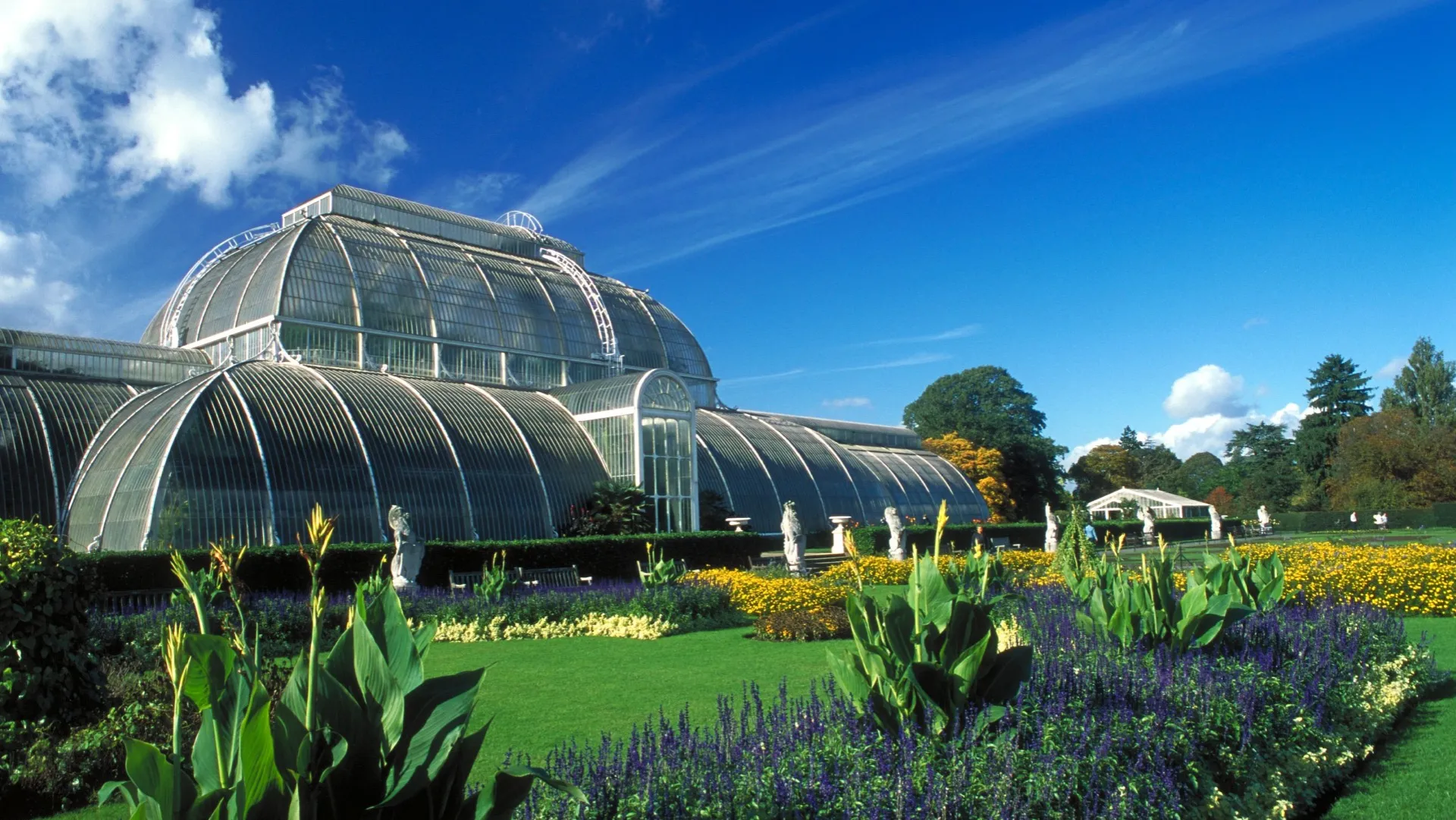
The Palm House is one of Kew Gardens’ most famous landmarks. Built in the 1840s by Decimus Burton and Richard Turner, it was a feat of Victorian engineering—a curved iron and glass structure designed to recreate a tropical rainforest environment. Today it remains a working glasshouse and a UNESCO World Heritage icon.
Inside, the air is warm and humid, and the planting is dense. You’ll find palms from around the world, many of them rare or endangered in the wild. The layout includes an upper walkway so you can look down into the canopy, and paths at ground level where you can get close to ferns, climbers, and understorey plants. Look out for carnivorous plants, bromeliads, and orchids tucked among the foliage. Information panels and labels help you identify species and understand Kew’s conservation work.
Visiting is straightforward: the Palm House is included in standard admission and is open daily, with last entry typically 30–45 minutes before closing. It can get very busy at weekends and during school holidays. For a quieter experience, go early in the day or on a weekday. The heat and humidity (often around 27°C and 70% humidity) can feel intense—light, breathable clothing and a bottle of water are a good idea. Allow 30–45 minutes to walk through at a relaxed pace.
Kew is gradually upgrading the Palm House to improve energy use and environmental performance, so you may see conservation in action. Pair your visit with a stroll through the surrounding beds or the Rose Garden for a contrast in temperature and style. However you plan your day, the Palm House is one of those places that reminds you why Kew is so special.
Nearby London Attractions
Whilst visiting Kew why not discover the best of London and its iconic attractions.